A leading racing-pigeon performance DNA testing laboratory in China
Technical support provided by Zhangjiakou SENO Biotech Co., Ltd. — a National High-Tech Enterprise
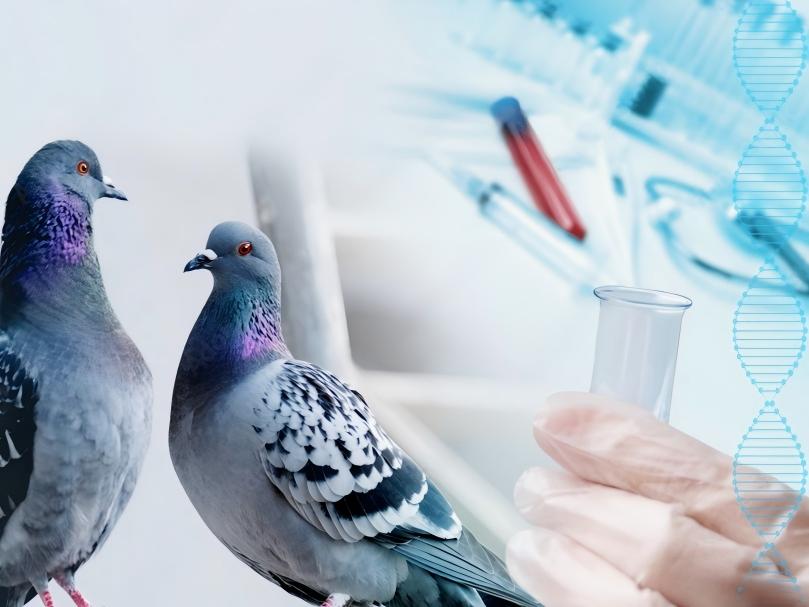
We focus on racing pigeon flight-gene DNA testing, pathogen testing and DNA ID / kinship testing. Using high-precision molecular diagnostics, we give fanciers, breeders and researchers worldwide reliable, data-driven references for breeding and health management.
12 years
Focused on pigeon testing
Founded in 2014
8
Gene markers analysed
A candidate-gene reference for breeding
12
Pathogen tests available
Four categories covered
2–3 days
Pathogen report turnaround
From sample arrival at the laboratory
Science-based breeding · Health protection · Verifiable pedigree
Analyses eight performance-associated loci (LDHA, DRD4, CRY1, MSTN, LRP8, GSR, CASK and F-KER) as a candidate-gene reference for pairing and training decisions.
Learn moreCovers 12 common pathogens (pigeon circovirus, herpesvirus, adenovirus, poxvirus, rotavirus, Newcastle disease, polyomavirus, Salmonella, Candida albicans, Trichomonas, Chlamydia psittaci and Mycoplasma), detected precisely by real-time PCR.
Learn moreUses STR microsatellite markers to build a unique DNA fingerprint for every pigeon, confirming kinship scientifically, guarding against pedigree misrepresentation, and providing a reference for breeder certification, sale verification and breeding management.
Learn moreGenotype interpretation and breeding significance in detail
Involved in anaerobic glycolysis — a key enzyme supplying energy during high-intensity flight. Genotype differences may influence energy-metabolism efficiency.
Breeding value:
Flags candidate genotypes associated with racing survival in published pigeon research — a genetic reference for breeding selection, not a speed guarantee.
Dopamine receptor D4 participates in neural signalling and is a candidate gene for racing performance in pigeons.
Breeding value:
A candidate locus for racing performance, supporting breeding and training reference alongside other loci and race records.
A core circadian-clock component regulating day/night rhythm. Note: magnetoreception research focuses on CRY4 — a different cryptochrome from CRY1.
Breeding value:
A candidate locus for rhythm and racing-performance reference, used together with other loci and race records.
Myostatin negatively regulates skeletal-muscle growth; loss-of-function variants cause muscle hypertrophy in mammals. One of the most-studied muscle-regulatory genes.
Breeding value:
Provides polymorphism reference across pigeon breeds; racing-performance evidence in pigeons is limited — interpret cautiously.
Feather keratin is the major structural protein of feathers; related gene variants may affect feather structure and mechanical traits — the link to flight performance is indirect.
Breeding value:
Provides plumage-related polymorphism reference; racing-performance evidence in pigeons is limited — interpret cautiously.
Involved in lipid metabolism and energy transport — a candidate gene in racing-performance research.
Breeding value:
A candidate locus for racing performance, used together with GSR and other loci plus race records.
A key antioxidant-defence enzyme related to oxidative-stress clearance and recovery — a candidate gene in racing-performance research.
Breeding value:
A candidate locus for racing performance, used together with LRP8 and other loci plus race records.
Participates in synaptic development and signalling — a cognition-related candidate gene studied in pigeons.
Breeding value:
A candidate locus related to nervous-system function; performance-association evidence is preliminary.
Covering common viral, bacterial, fungal and parasitic pathogens of racing pigeons
Virus
Virus
Virus
Virus
Virus
Virus
Bacteria
Fungus
Parasite
Bacteria
Virus
Bacteria
Real-time PCR detects very low copy numbers of pathogen nucleic acid
A standardised electronic report in 2–3 working days
Specific primers and probes avoid cross-reactivity
Viruses, bacteria, fungi and parasites all tested
Trust · Expertise · Efficiency
A National High-Tech Enterprise with continued investment in R&D and technical innovation.
Laboratory workflows follow ISO quality-management standards, with QC steps designed to reduce the risk of error.
A municipal key laboratory, with test methods that are continuously verified and improved.
Pathogen testing reports are issued in 2–3 working days after the sample reaches the laboratory.
Collect feathers with an intact root or a blood-card sample safely. We accept compliant samples from fanciers worldwide.
Send the sample together with the submission form by DHL, FedEx or a similar courier.
High-precision PCR analysis starts as soon as the laboratory receives the sample.
Receive a complete report with genotype interpretation by email or via a secure platform.
The latest knowledge on gene testing, disease control and science-based breeding.
